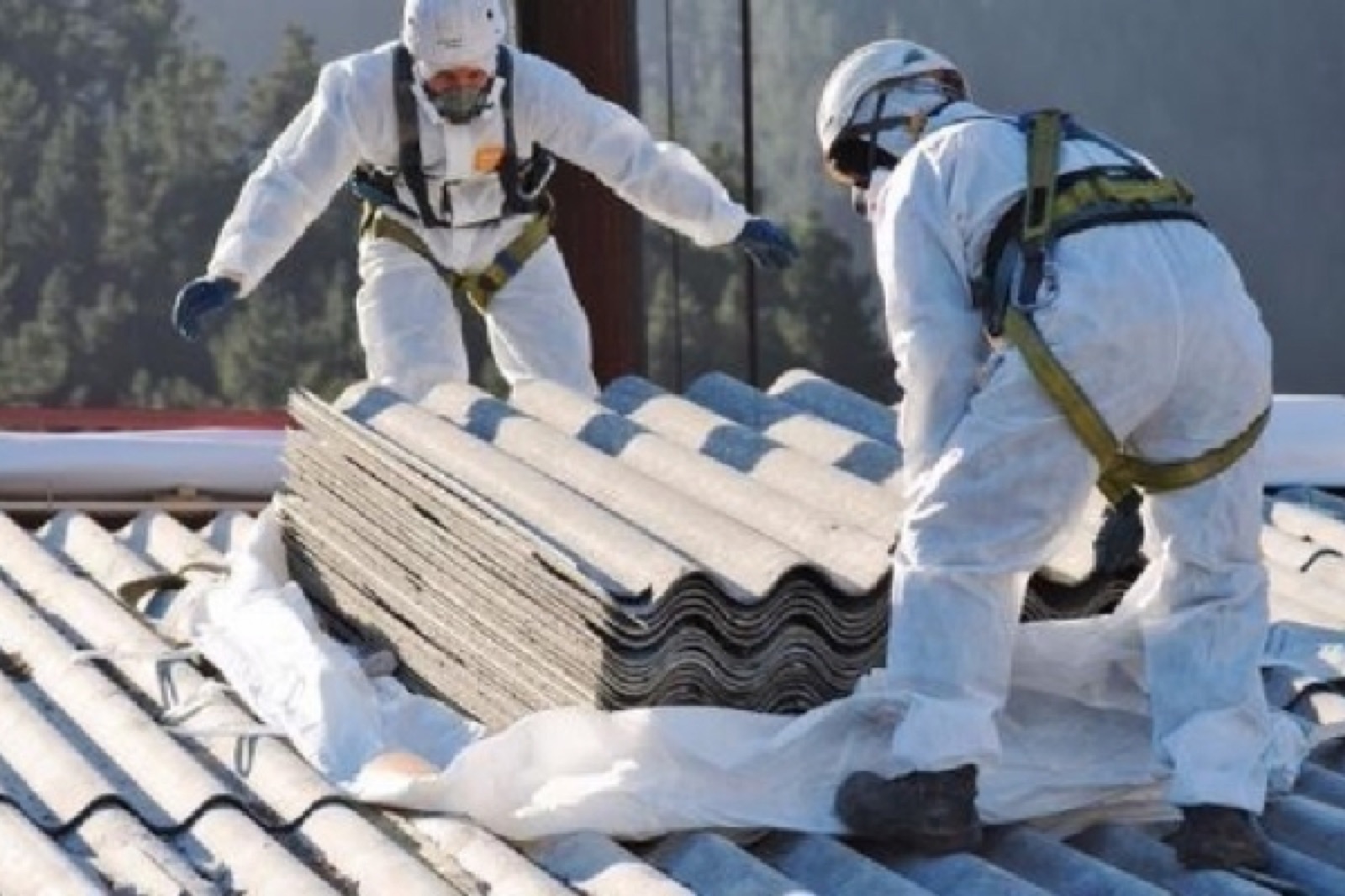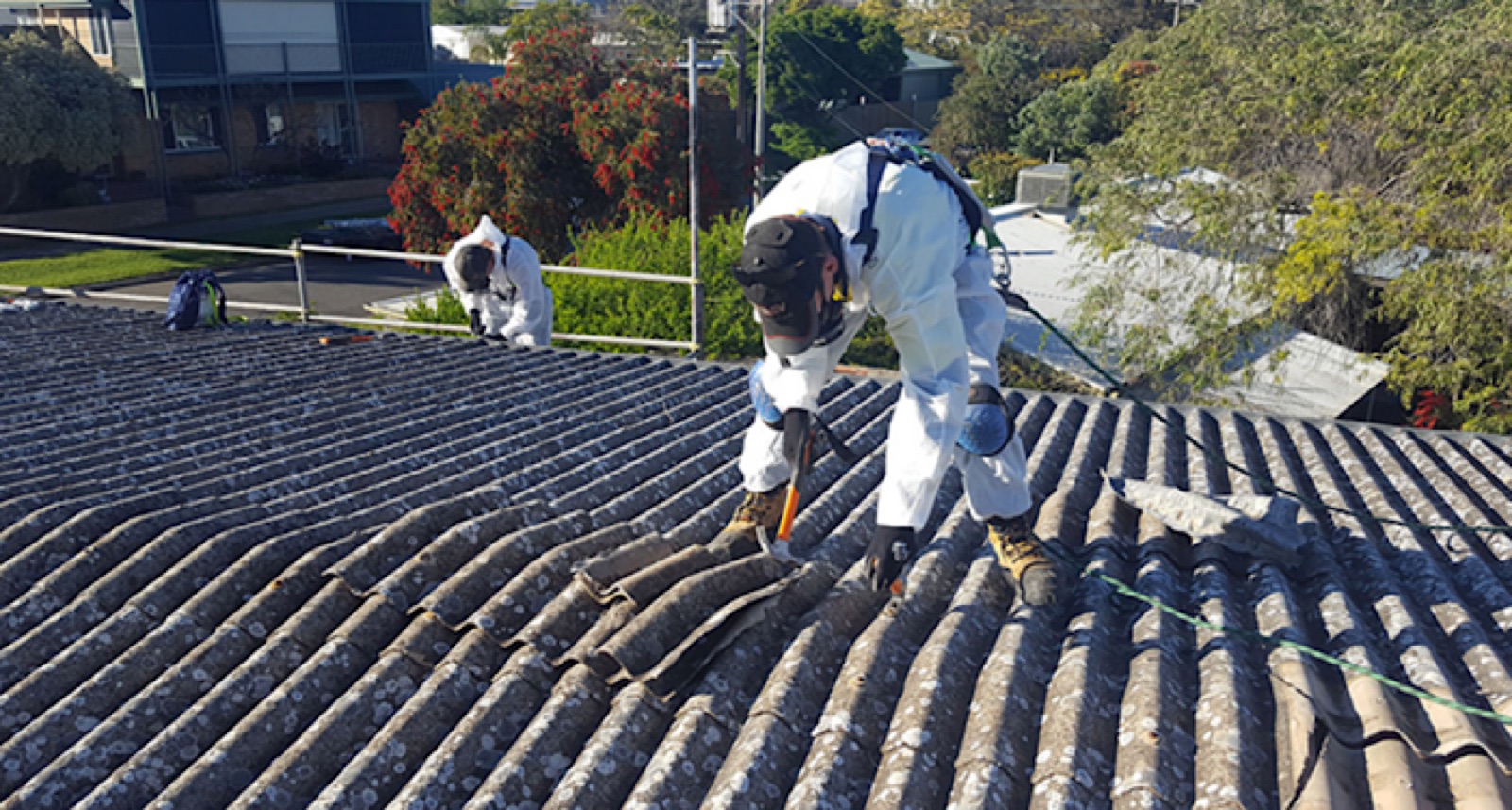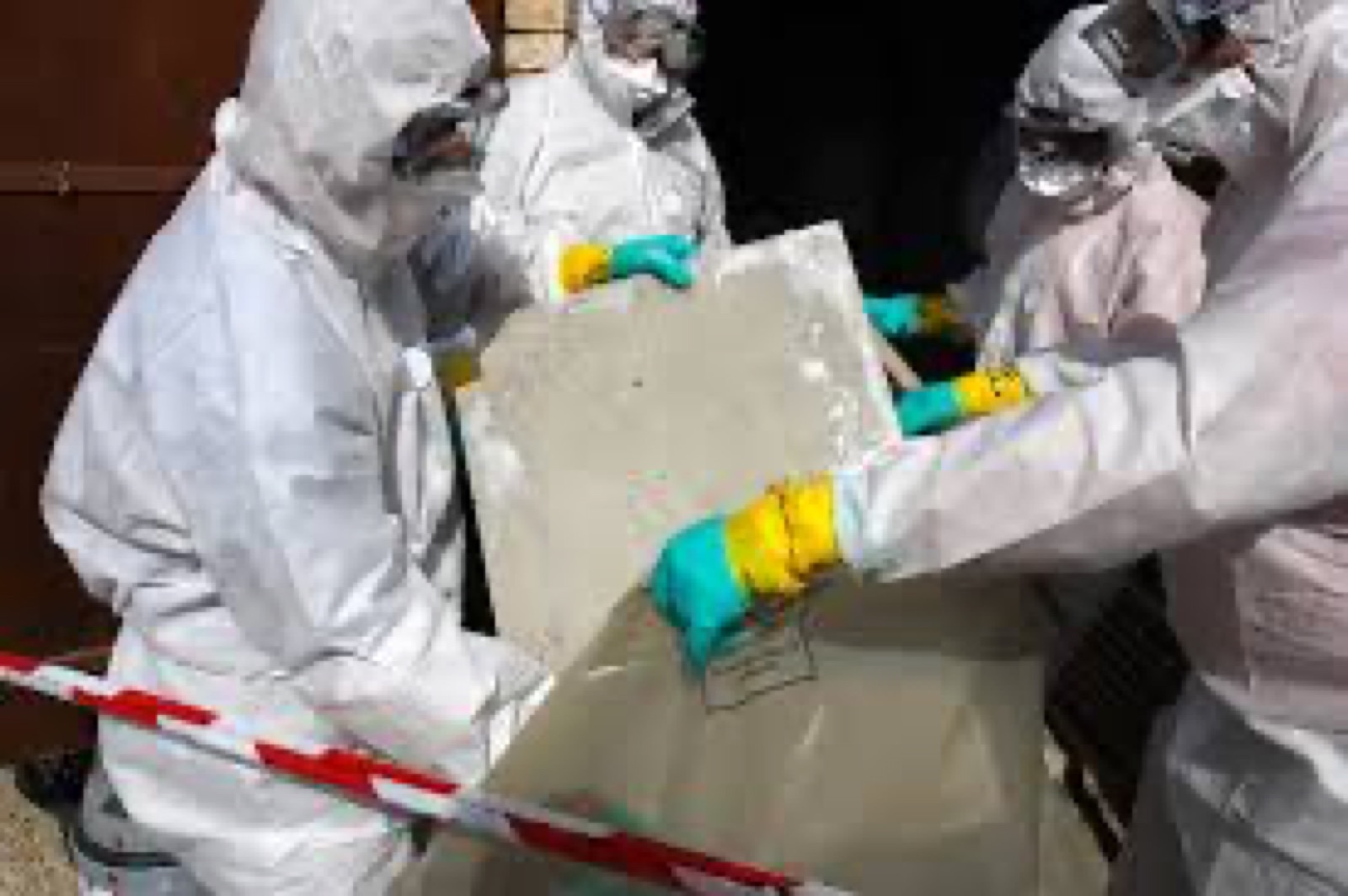
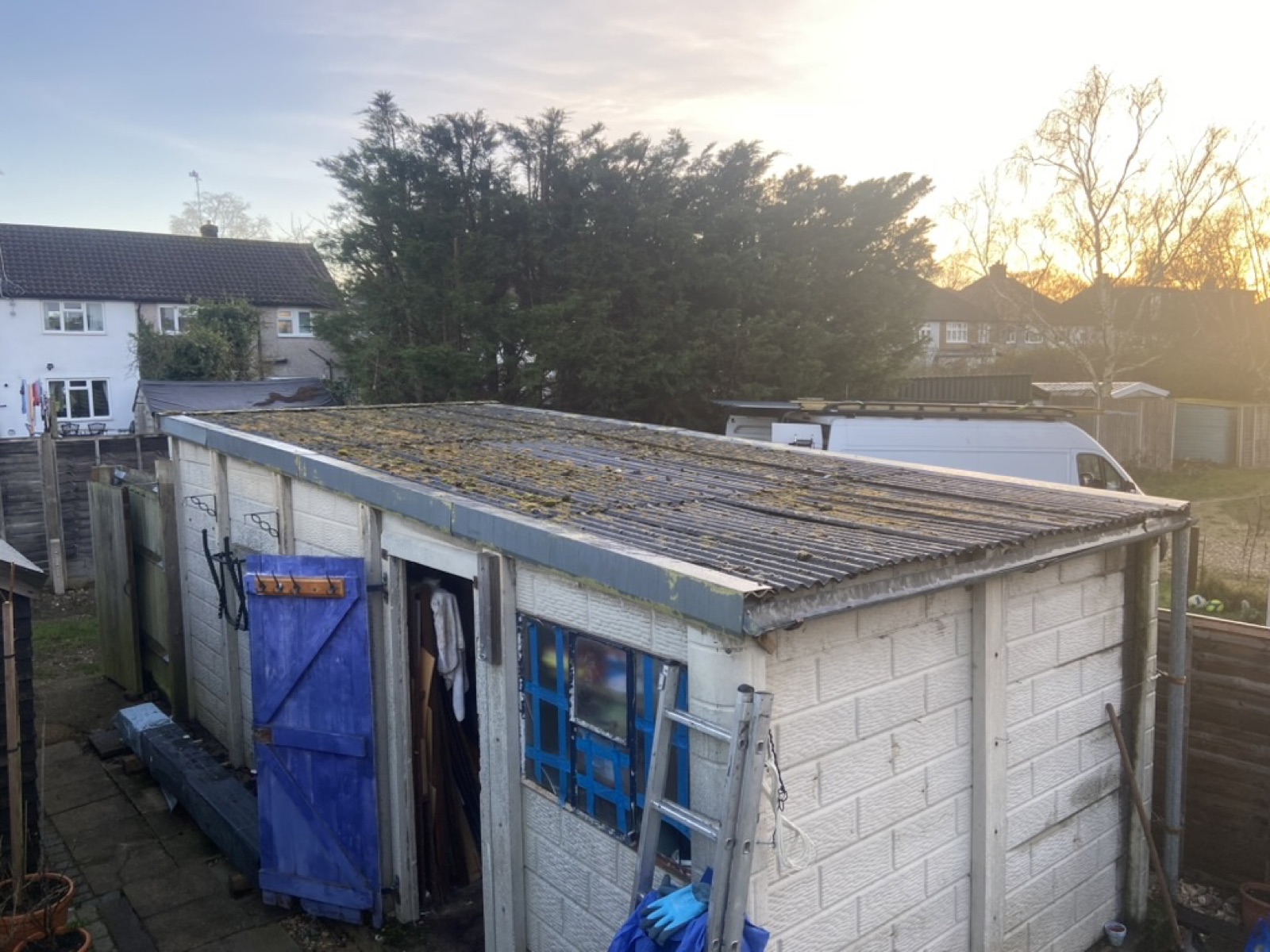
The quickest way to tell if your garage roof is asbestos is to check its age and its appearance. If the garage was built or roofed before 2000 and the roof is made from grey corrugated cement sheets, there is a strong chance they contain asbestos. Asbestos was fully banned in the UK in November 1999, so any roof installed after that date will be asbestos free.
Look for the classic “big six” corrugated profile, a dull grey cement colour, moss growing along the troughs, and a dimpled surface texture rather than the smooth ribs of steel or the shine of fibreglass. Small bundles of fibres showing at a cracked or broken edge are one of the strongest visual indicators of all.
Visual checks only ever give you a probability. The one reliable method of asbestos garage roof identification is laboratory testing of a small sample, which typically costs between £40 and £120.
Why Pre-2000 Garages Are the Risk Window
Asbestos cement was one of the most common building materials of the twentieth century. It was cheap, fireproof and almost indestructible, which made it the default choice for garage roofs from the 1930s right through to the 1990s.
Blue and brown asbestos were banned in 1985, but white asbestos (chrysotile) stayed legal in cement products until the full ban in November 1999. That is why 2000 is the cut-off date. A garage built or re-roofed before then may contain asbestos cement, and one finished after it will not.
Concrete sectional garages are the biggest offenders. Huge numbers of them went up across London and the South East with corrugated asbestos cement roofs, and a large share of those roofs are still in place today.
Visual Clues That Point to Asbestos Cement
No single clue is conclusive, but the more of these you can tick off, the more likely your roof is asbestos cement:
- The “big six” profile. Wide, shallow corrugations roughly six inches apart, much broader than the tight ribs of steel sheeting.
- A dull grey cement look. The sheets resemble hardened grout or unpainted concrete rather than metal or plastic.
- Heavy moss and lichen growth. Asbestos cement is porous, so moss takes hold far more readily than it does on steel or fibreglass.
- A dimpled, golf-ball texture. Decades of weathering erode the cement surface into a pitted finish.
- Fibre bundles at broken edges. Cracked corners or old drilled holes often show tiny whitish fibre tufts within the cement.
- Matching roofline parts. Ridge caps, barge boards and sometimes gutters and downpipes moulded from the same grey cement material.
- Moulded brand markings. Names such as “Everite” or “Turners” pressed into the sheet are a near-certain sign of asbestos-era manufacture.
Lookalikes: Steel, Bitumen and Fibreglass
Plenty of garage roofs look similar from the pavement, so rule out the common lookalikes first.
Corrugated steel has tighter, sharper ribs and rings like metal if you tap it with a broom handle from below. It rusts at the edges and around fixings, which asbestos cement never does. A magnet on a pole settles the question instantly.
Bitumen sheets are usually black, red or green, feel slightly springy, and have a fibrous rather than stony surface. Fibreglass and PVC sheets are translucent and let daylight through, which cement never will. Modern fibre cement made after 2000 can look almost identical to the old sheets, which is exactly why age, not appearance, is the deciding factor.
What Not to Do With a Suspect Roof
Asbestos cement sheets are bonded chrysotile, and they release very few fibres while they sit undisturbed. The risk starts the moment you break that bond.
Never drill, cut, break or sand a suspect sheet, and never snap a corner off as a casual sample. Never pressure-wash the roof either. A jet wash strips the cement surface and throws asbestos fibres across your garden and your neighbour’s in a fine wet mist.
Stay off the roof as well. Weathered sheets are brittle, will not take a person’s weight, and falls through fragile roofs are a well known cause of serious injury. If you are weighing up a DIY job, read the guide on whether you can remove an asbestos garage roof yourself before you touch anything.
Not sure what you are looking at? Send us a photo or book a visit and we will identify it for you. We offer free fixed quotes with no deposit*, and most garage roofs are removed and replaced in a single day. Request your free, no-obligation quote here.
How Professional Testing Works and What It Costs
Laboratory testing is the only way to be certain. A trained operative dampens a small area of the sheet, takes a thumbnail-sized sample, double-bags it and seals the sample point. The sample then goes to an accredited laboratory for analysis under a microscope.
Results usually come back within a few days, and a straightforward test typically costs £40 to £120 depending on how quickly you need the answer. Postal sampling kits exist, but taking your own sample means disturbing the material yourself, so most homeowners are better off leaving it to a professional.
The report will confirm the asbestos type. Garage roof sheets almost always come back as chrysotile, white asbestos, bonded within the cement.
What to Do if the Test Comes Back Positive
A positive result is not an emergency. You have three realistic options, and the right one depends on the roof’s condition and your plans for the garage.
If the sheets are sound, sealed and undamaged, you can leave them in place and simply avoid disturbing them. Intact bonded cement outdoors is comparatively low risk. Encapsulation, a specialist coating that seals the surface, buys more time for a roof that is ageing but not yet failing.
Removal becomes the sensible choice when sheets are cracked or leaking, when moss damage has left the surface soft and crumbly, or when you plan to convert, sell or demolish the garage. Professional asbestos roof removal paired with a same-day garage roof replacement deals with the problem permanently, and the asbestos garage roof removal cost guide breaks down what to budget.
How The Garage Roof Company Handles It
We are a specialist garage roofing and asbestos removal contractor based in Chessington, Surrey, covering London and the South East, including Kent, Sussex, Hampshire and Berkshire. Our UKATA-trained teams work to HSE guidance and the Control of Asbestos Regulations 2012.
Removing whole bonded cement sheets is normally non-licensed work under those regulations, but strict legal duties on safe handling and disposal still apply. We are an Environment Agency registered waste carrier (licence CBDU516703), and every job comes with a Hazardous Waste Consignment Note so you hold written proof of legal asbestos disposal.
Most garage roofs are stripped, cleared and re-sheeted in one day, backed by a 10-year workmanship guarantee and manufacturer warranties of up to 30 years on the new sheets. With more than 210 Google reviews and a 5.0 rating, you can see exactly how past customers rate the work. Call us on 0203 468 1242 or request a quote online, with no deposit* and nothing to pay until completion.